Welcome to the FlagPartner Blog
2026年9月22日
Sourcing Prayer Rugs: Materials, Sizes and Quality Checks for Importers
2026年9月23日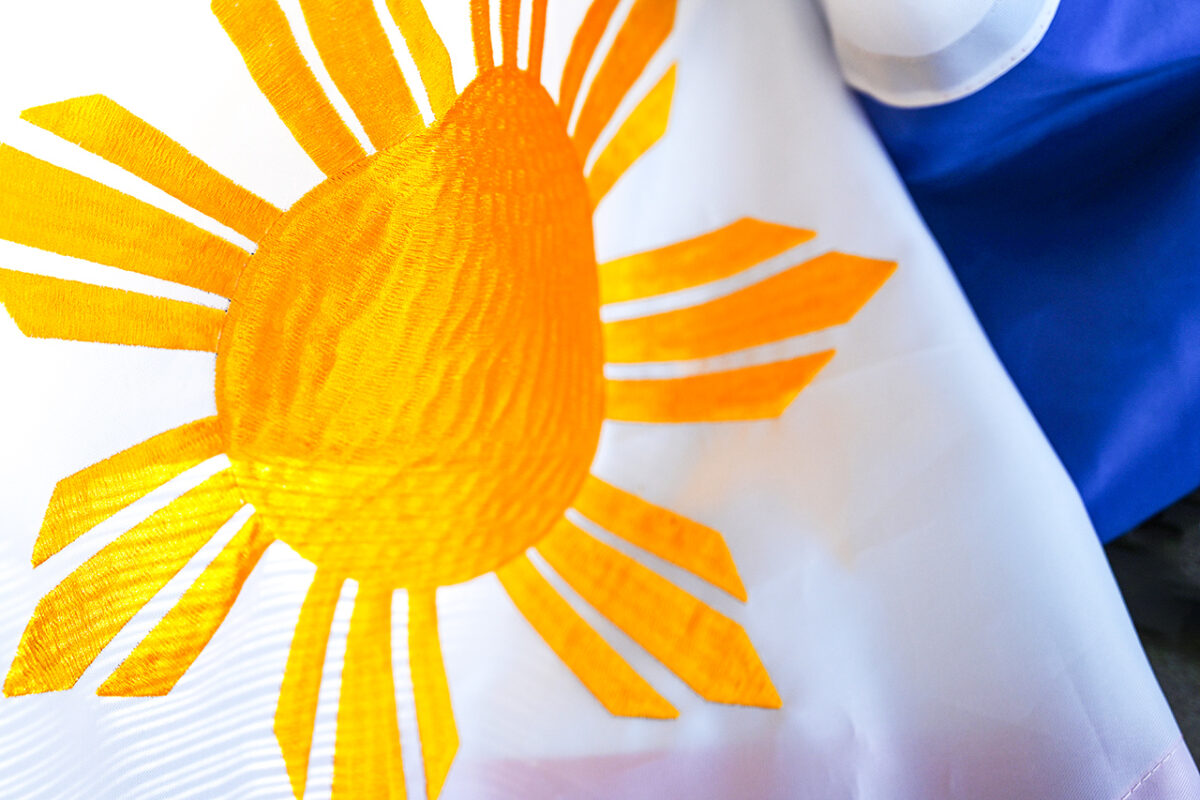
The Philippine national flag is one of the steadiest sellers in the Southeast Asian flag trade. Demand comes from government and school tenders, corporate reception areas, retail chains selling to households, and promotional distributors supplying parades and civic events. This guide walks importers, distributors and promotional product buyers through the specifications that matter most when sourcing: colours, proportions, sizes, fabrics and mounting hardware.
Why the Philippine Flag Needs Careful Sourcing
Unlike a generic promotional banner, a national flag carries a legal and symbolic weight. The Philippines regulates its flag under Republic Act No. 8491, the Flag and Heraldic Code, which covers the design, the colours, how it may be displayed and what may not be added to it. That has two direct consequences for buyers.
First, specification accuracy matters. A flag with the wrong number of rays, the wrong tone of blue, or the sun positioned incorrectly will not be accepted by institutional buyers. Second, the flag design itself cannot be modified — no added logos, text or emblems. Promotional buyers who want branded visibility should treat the flag and a branded companion item (bunting, a table runner, a custom printed backdrop) as two separate products.
That means your supply chain needs to support both strict-compliant flag production and ordinary custom textile printing. A manufacturer that handles both can serve the account from a single purchase order.
Getting the Colours Right
The Philippine flag uses three colours, and all three need to be agreed in writing before production.
The Three Colours
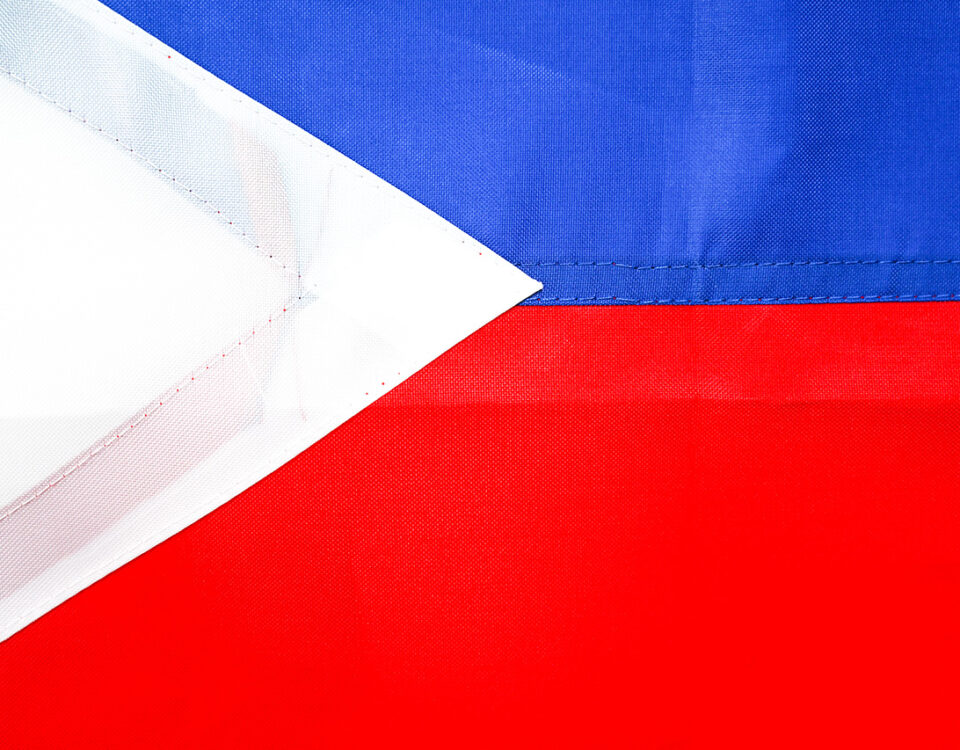
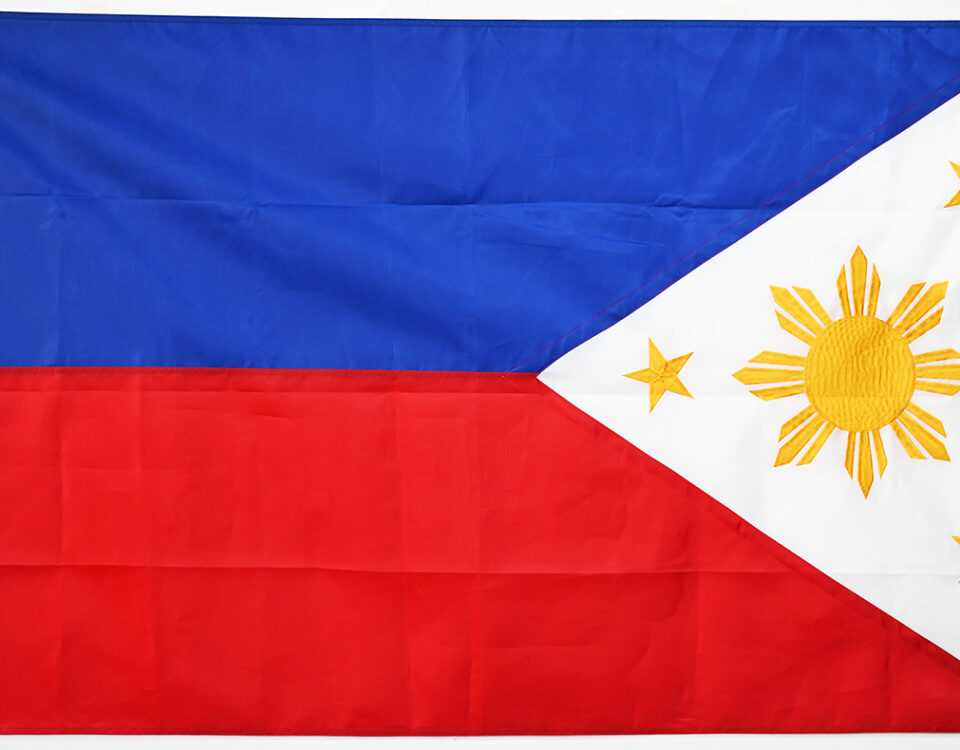
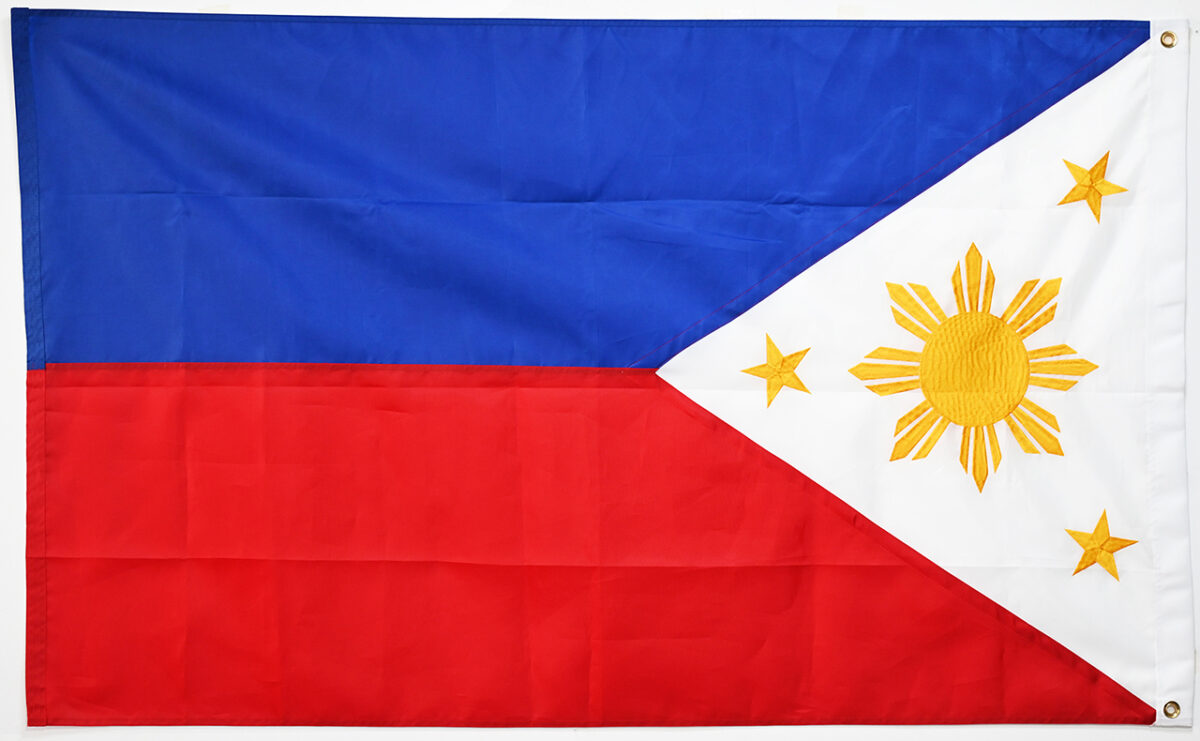
- Royal blue — the field on the upper part of the fly in peacetime orientation. Frequently referenced in print as a deep blue around hex #0038A8.
- Scarlet red — the field on the lower part of the fly in peacetime orientation. Frequently referenced around hex #CE1126.
- White — the equilateral triangle at the hoist, containing a golden eight-rayed sun and three five-pointed stars.
Published hex and Pantone references are a useful starting point, but they are not a substitute for a physical sample. Screen ink, fabric type and the base fabric whiteness all shift how a colour reads in daylight. Ask your supplier for a pre-production strike-off or a sewn sample, and compare it against your own reference under natural light — not under a phone screen or indoor lighting.
Peacetime and Wartime Orientation
The Philippine flag has a feature few other national flags share: the blue and red fields swap positions depending on the state of the nation. Blue on top indicates peacetime. Red on top is the wartime orientation, declared by the government.
For commercial supply, virtually all orders are the peacetime orientation. Make this explicit on your purchase order, because a reversed print is not a simple defect to catch on a folded flag — it only becomes obvious when the flag is fully unfurled.
Choosing the Right Size
The Philippine flag’s official proportion is 1:2 (hoist to fly). That is an important detail, because many commercial flags are manufactured at 2:3, which is the ratio used by several other countries. A 3 × 5 ft flag is a 2:3 flag, not a 1:2 flag.
For general retail and promotional use, 3 × 5 ft remains the volume seller. For tenders and institutional buyers where the specification is checked, supply true 1:2 sizes such as 3 × 6 ft, 4 × 8 ft or 5 × 10 ft.
| Size | Metric | Typical use |
|---|---|---|
| 4 × 6 in | 10 × 15 cm | Desk flags, hand wavers |
| 6 × 9 in | 15 × 22 cm | Hand wavers, parades |
| 8 × 12 in | 20 × 30 cm | Car flags, small promotional |
| 2 × 3 ft | 60 × 90 cm | Small poles, indoor offices |
| 3 × 5 ft | 90 × 150 cm | Household and commercial outdoor |
| 3 × 6 ft | 90 × 180 cm | 1:2 compliant outdoor |
| 4 × 6 ft | 120 × 180 cm | Outdoor, moderate wind |
| 4 × 8 ft | 120 × 240 cm | 1:2 compliant, institutional |
| 5 × 10 ft | 150 × 300 cm | Large poles, civic buildings |
| 6 × 10 ft | 180 × 300 cm | Public buildings, plazas |
| 8 × 12 ft | 240 × 360 cm | Large-scale installations |
Small sizes are usually sold on a stick, base or clip. Large sizes — typically 5 × 8 ft and above — are often produced by sewing panels and stripes rather than printing one piece, which gives better seam strength on a pole.
Fabric and Construction Options
Fabric choice is driven by where the flag will fly, how long it will be displayed and what it needs to cost. As the custom printed flag supplier for many regional buyers, FlagPartner produces the Philippine flag across the following base cloths:
| Material | Approx. weight | Where it fits |
|---|---|---|
| Knitted polyester | 110–120 gsm | Promotional giveaways, indoor use, retail packs |
| Spun / woven polyester | 150–160 gsm | Outdoor poles, better opacity and body |
| Nylon | 70–100 gsm | Light breeze conditions, fast drying |
| Polyester mesh | 130–270 gsm | High-wind sites, large facades, see-through |
| Satin | approx. 110 gsm | Ceremonial and indoor display, takes fringe well |
| Blockout / double-sided | varies | Two readable faces, indoor and display use |
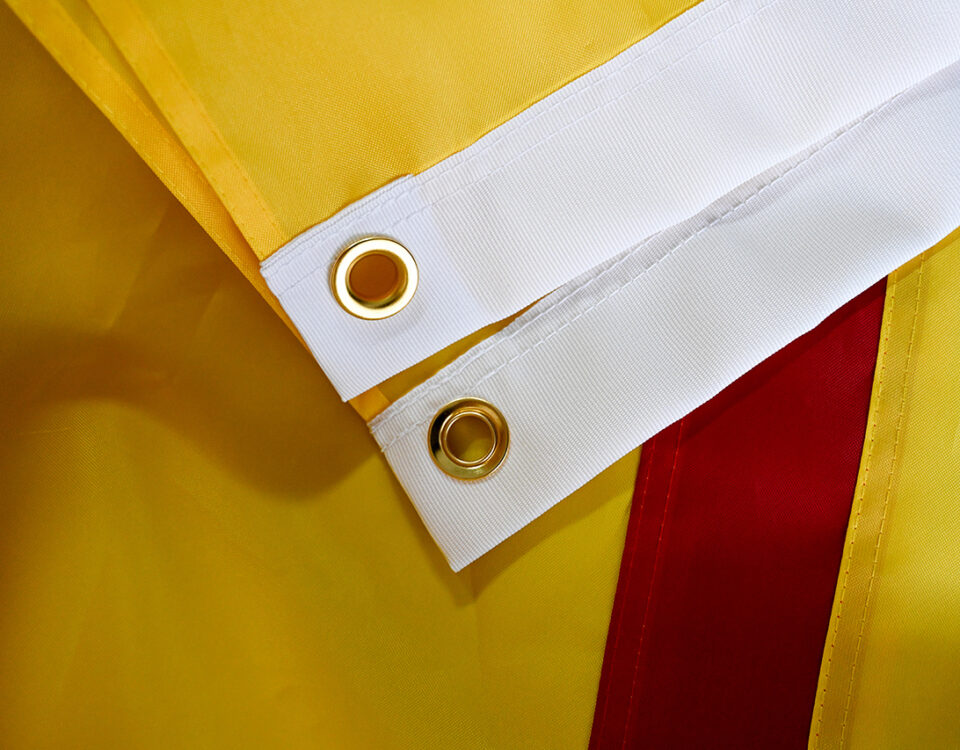
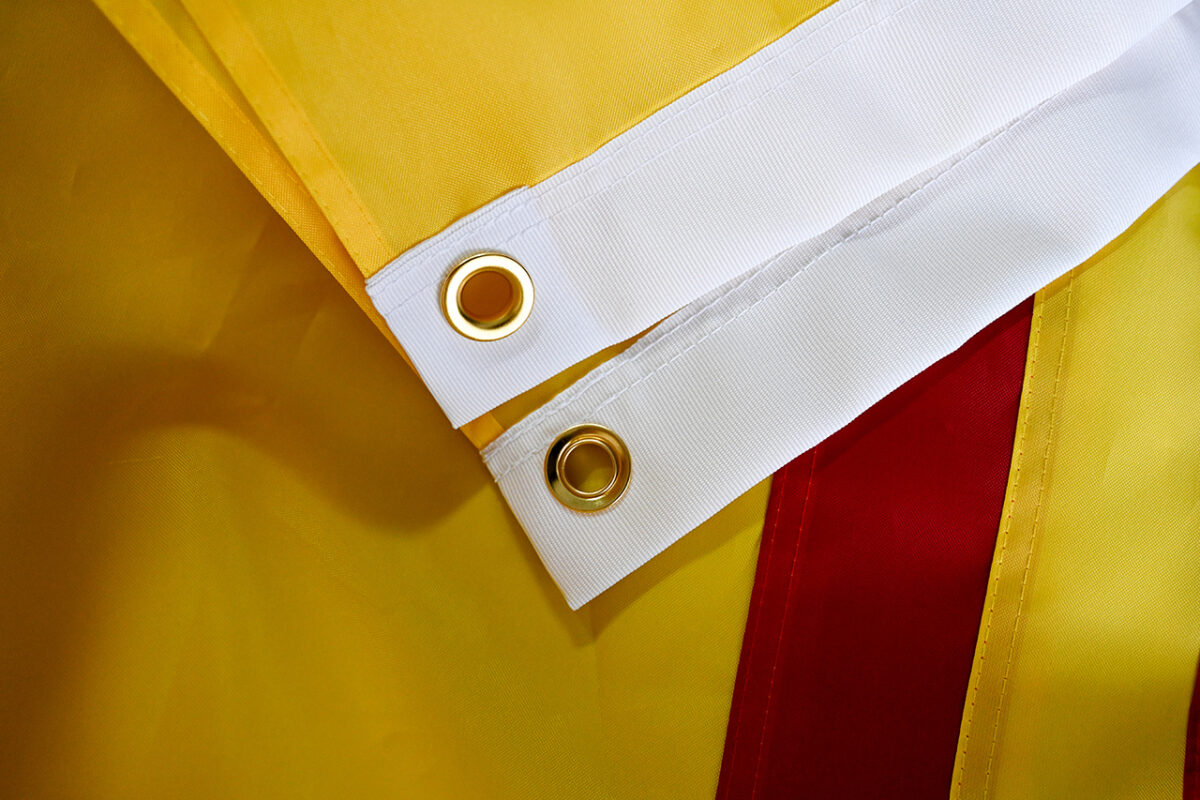
Construction details worth specifying on the PO include a reinforced hoist, a reinforced fly hem (the fly edge takes the most wind
Browse the full range: https://flagpartner.com/shop/
Email: flagswin@flag-win.vip
WhatsApp: +86 13031678795
Facebook: https://www.facebook.com/StarFlagFactory/
Alibaba.com: https://wfqyflag.en.alibaba.com/