Event Flags Southeast Asia: A Sourcing Guide for Sports and Festival Buyers
2026年10月16日
ASEAN Flag Sizes: What Wholesale Buyers in Southeast Asia Actually Order
2026年10月21日
Why the Philippine flag is a specification-driven product
The national flag of the Philippines is one of the few flags in Southeast Asia where the design itself is regulated in detail. Republic Act No. 8491, the Flag and Heraldic Code of the Philippines, sets out the proportions, the colours, the placement of the sun and stars, and the conditions under which the flag may be displayed or reproduced. For importers and distributors, that means a generic “blue and red banner” will not do — the flag has to be built to a defined specification, or it risks being unusable in the market it is intended for.
This guide covers the practical decisions buyers usually face: which colours to match, which sizes move in the Philippine market, which fabrics suit a tropical climate, and how the flag should be finished so it can be mounted on poles, walls, desks or handheld sticks. It is written for importers, distributors and promotional buyers sourcing from a Philippines flag supplier for resale across the region.
Colours: royal blue, scarlet red, white and golden yellow
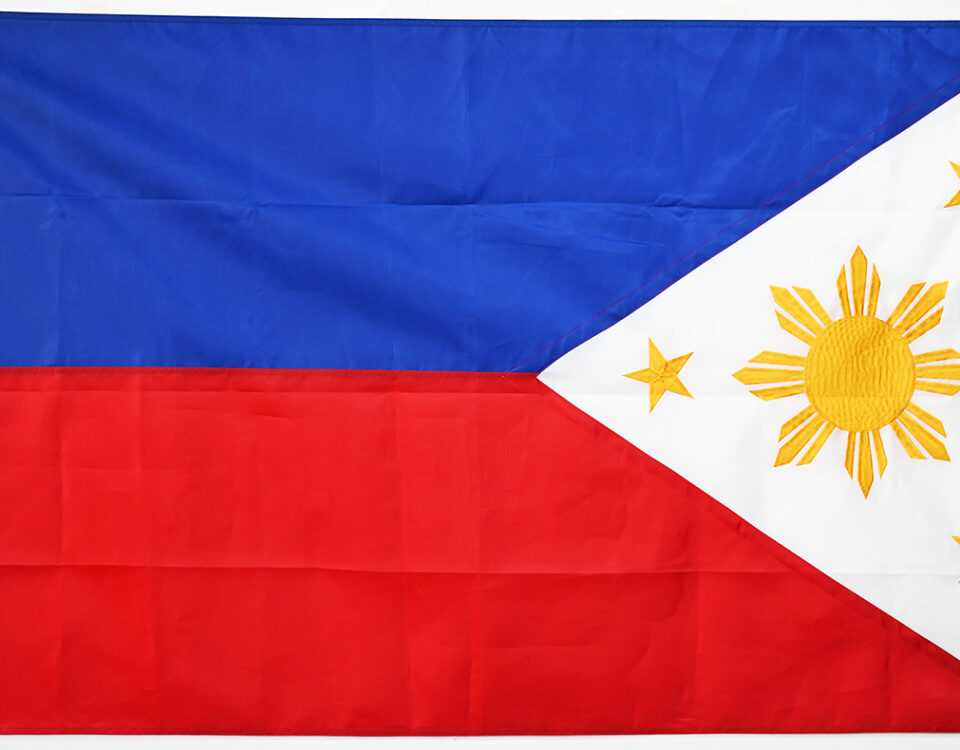
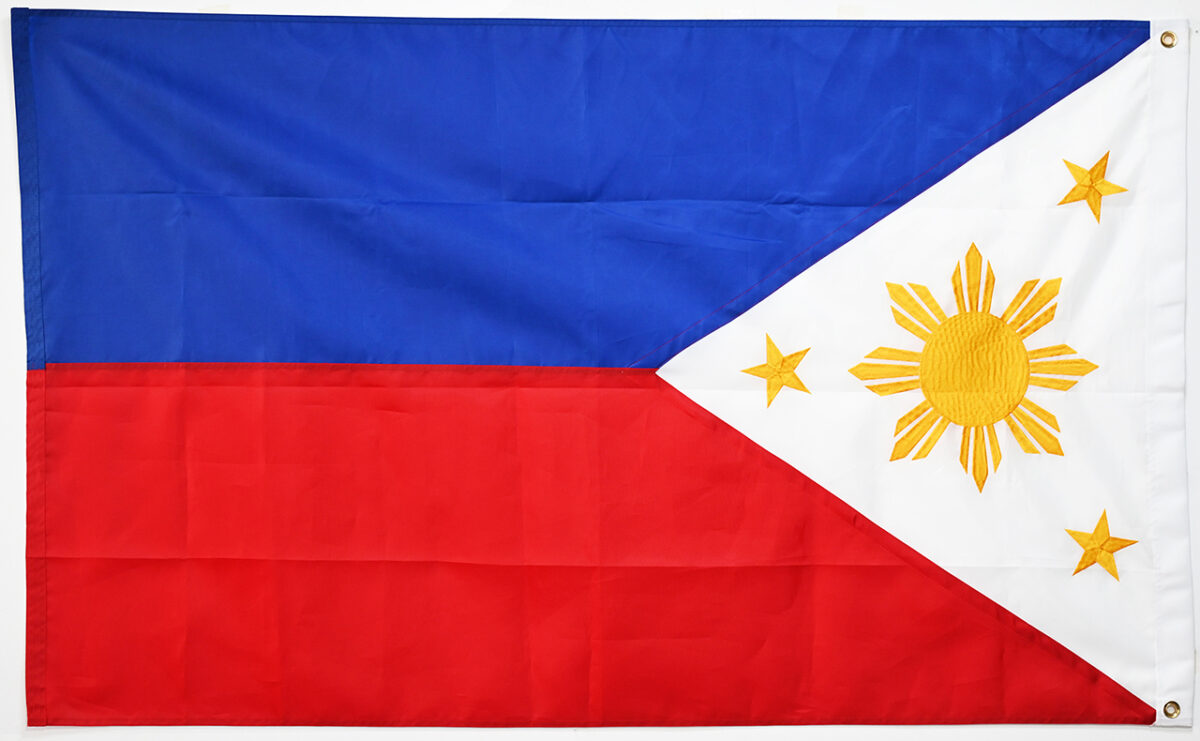
The Philippine flag uses four colours, and the blue has a history worth knowing. The 1998 version of the Flag and Heraldic Code restored royal blue in place of the darker navy shade that had been used for several decades. Older artwork and older stock in the market often still shows navy, which is a common source of complaints when buyers compare shipments side by side.
- Royal blue — the upper field in peacetime orientation
- Scarlet red — the lower field in peacetime orientation
- White — the equilateral triangle at the hoist
- Golden yellow — the eight-rayed sun and the three five-pointed stars
Two practical points for buyers. First, confirm the target colour reference with your customer or with the National Historical Commission of the Philippines (NHCP) before bulk production, rather than approving a shade from a screen image — monitors vary considerably. Second, if you are sourcing a mixed programme of Philippine and other ASEAN flags, run the same blue reference across the range so retail displays look consistent.
Proportions and standard Philippine flag sizes
The official proportion is 1:2 (height to width). Sizes that do not follow this ratio are technically out of spec, and while they may sell as decorative items, they should never be presented as national flags for official use. The table below shows the formats most commonly ordered by distributors, with typical end uses.
| Size (H × W) | Typical use | Common mounting |
|---|---|---|
| 20 × 40 cm | Hand-wavers, event giveaways, retail packs | Plastic stick or short dowel |
| 30 × 60 cm | Desk sets, car flags, small indoor displays | Table stand, suction pole, car pole |
| 60 × 120 cm | Classrooms, office interiors, shop windows | Indoor pole set, wall bracket |
| 90 × 180 cm | Standard office and institutional flagpole | Grommets or rope & toggle |
| 100 × 200 cm | Government buildings, plazas, ceremonial use | Halyard with snap hooks |
| Custom / larger | Masts, stadiums, large facade displays | Reinforced hoist, heavy hardware |
Because official size requirements exist for particular settings — government offices, schools and ceremonial occasions — it is worth advising your customers to verify the applicable size and display rules with the NHCP before committing to a large order. Many importers carry two or three sizes rather than a full range, and 60 × 120 cm and 90 × 180 cm tend to be the volume movers.
Fabric and construction choices
Philippine conditions — strong sun, seasonal rain, coastal humidity — reward sensible fabric selection over the cheapest option on the quote sheet.
- Knitted polyester — lightweight, prints cleanly, works well for hand-wavers and short-term display.
- Spun polyester — a heavier, more opaque weave with a matte finish that suits formal and institutional use.
- Nylon — lighter and responds to low wind, a common choice for tall poles where airflow is inconsistent.
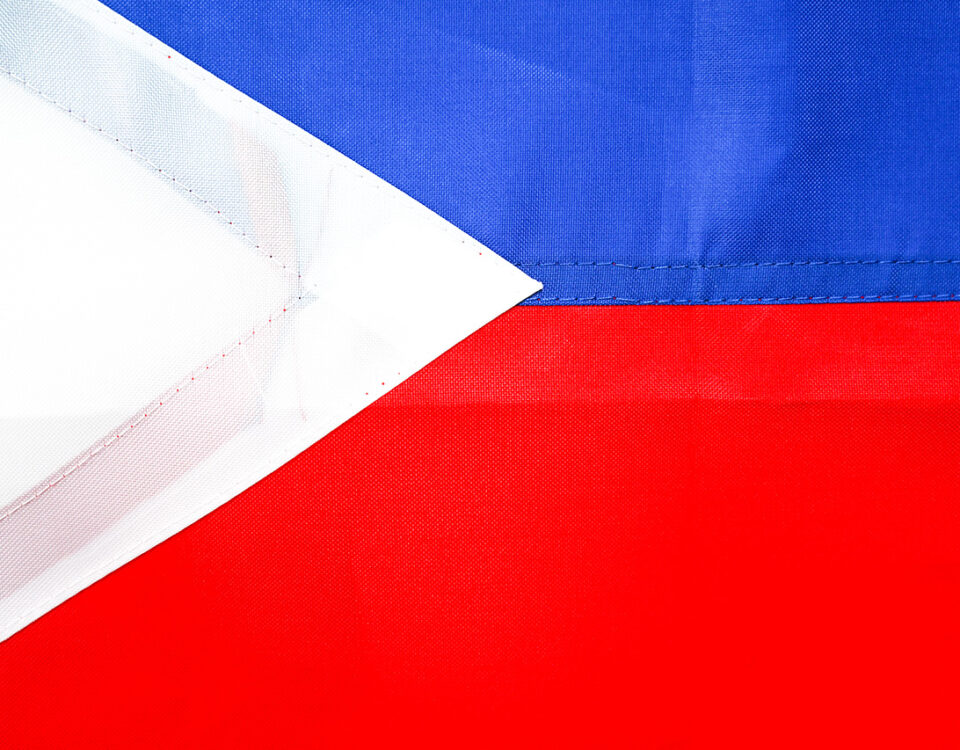
- Two-panel construction — two printed panels sewn back to back with a liner, so the design reads correctly on both sides. This matters for the Philippine flag, because a mirrored reverse puts the white triangle on the fly instead of the hoist.
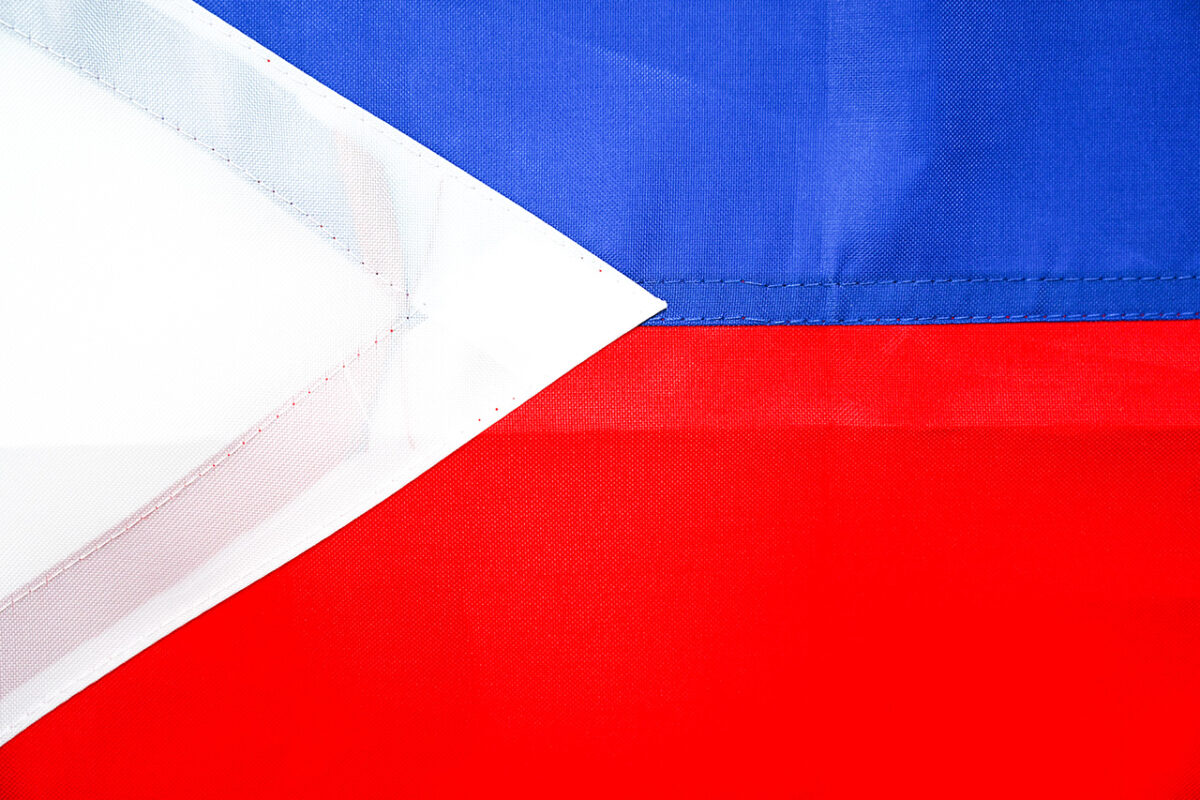
Finishing details to specify: a reinforced hoist, quad-stitched hems, corner reinforcement, and a clean cut edge on the fly. These are construction choices, not guarantees — how long a flag lasts depends on wind exposure, UV levels and how often it is flown.
One design point worth flagging to end users: the flag is displayed with the blue field on top in peacetime and the red on top in time of war. Export cartons and instructional inserts should show the peacetime orientation so retail staff do not mount it incorrectly.
Mounting options for every channel
Flagpole mounting
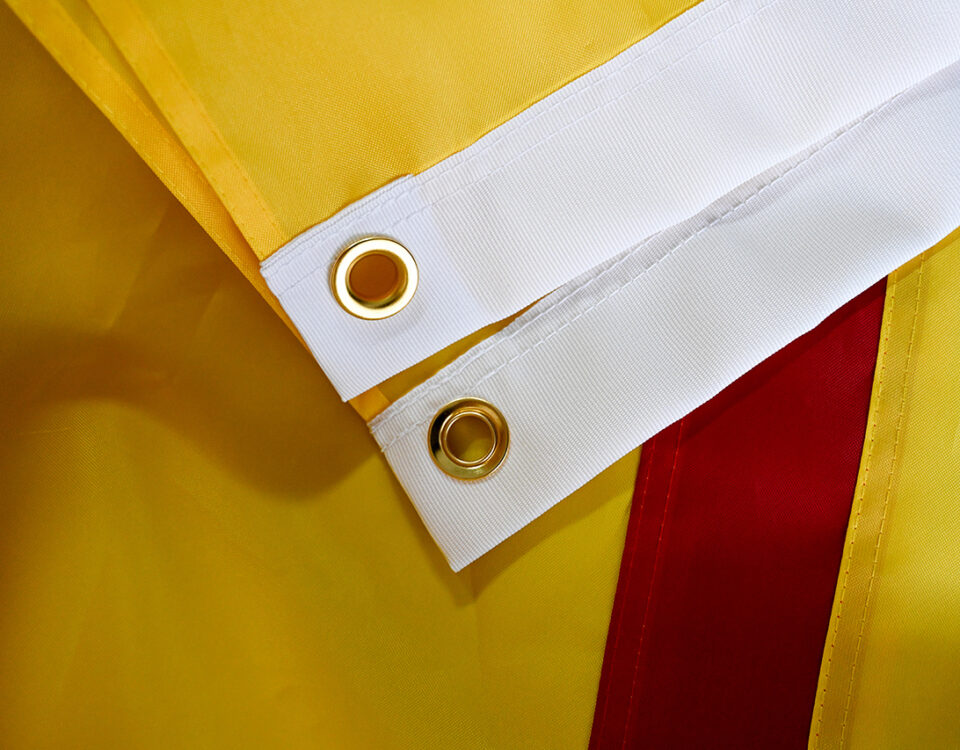
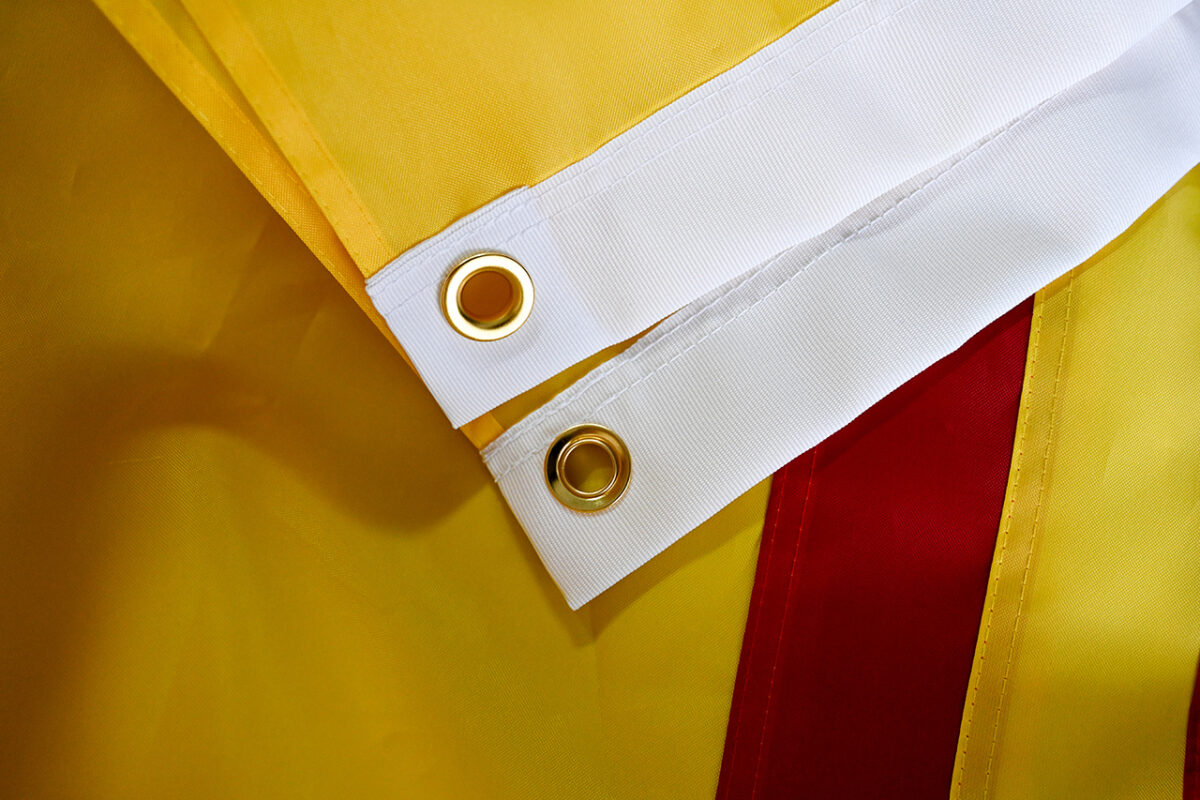
- Header tape with brass grommets — the standard hoist finish; grommets at the top and bottom corners, with a centre grommet on larger sizes.
- Rope and toggle —
Browse the full range: https://flagpartner.com/shop/
Email: flagswin@flag-win.vip
WhatsApp: +86 13031678795
Facebook: https://www.facebook.com/StarFlagFactory/
Alibaba.com: https://wfqyflag.en.alibaba.com/